Showing posts with label breathing. Show all posts

Sunday, April 5, 2015

Float Tank Squash Visualization

It's hard to believe it's been over a month since my last post. I have been quite busy preparing for and then running 2 weeks of spring break junior camps. Canadian Junior Nationals are in a week and a half and some of the kids in the camps were preparing for this event. The first camp I ran was for intermediate competitive juniors and was only half days. The 2nd week was full days and for advanced competitive juniors. In the advanced camp this year I decided to include something a little different.

My friend opened the Victoria Float House (www.floathousevictoria.com) almost 1 year ago and is also a good squash player. He grew up playing competitively and understands the importance of the mental game in squash. I feel it can be challenging working with a group of kids and implementing imagery into practice, so for the camp I decided to book each kid a float and recorded an audio track to guide them through some challenging situations that may occur at Nationals.

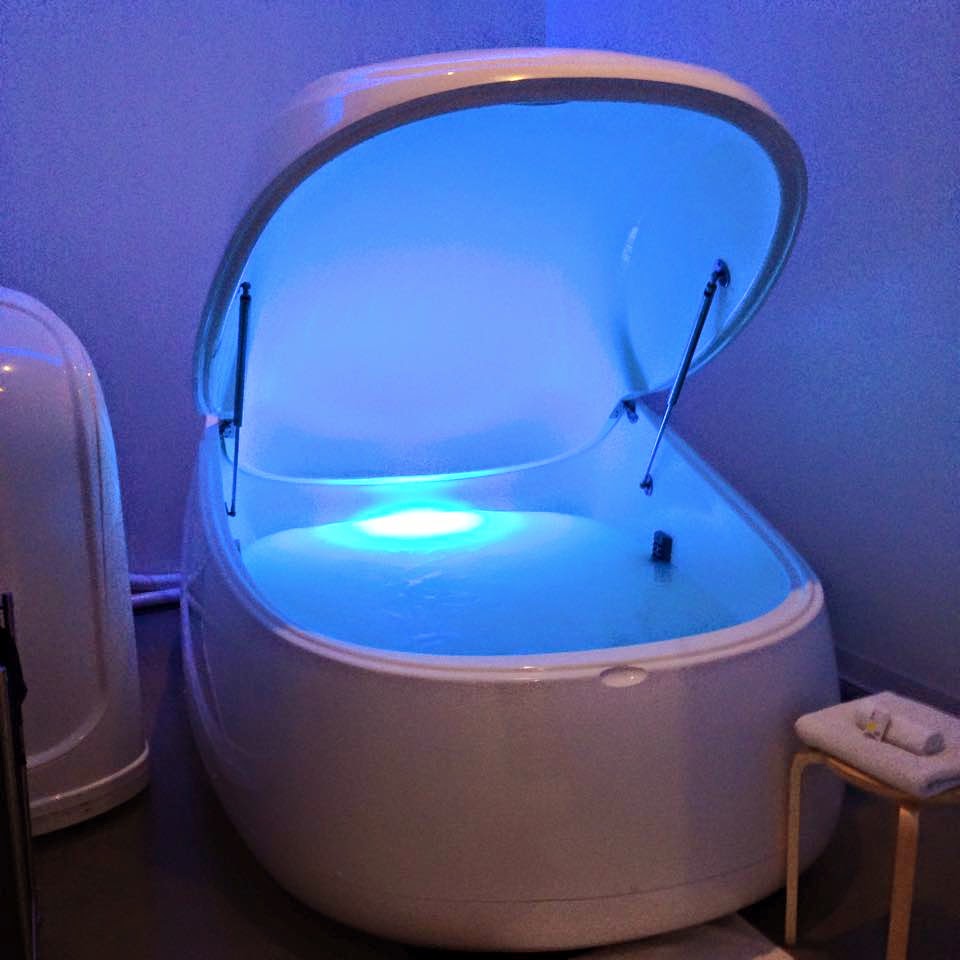
Here is a picture of one of the float tanks. You can turn the light off when you get in the tank. But only a few kids said they turned the lights off.


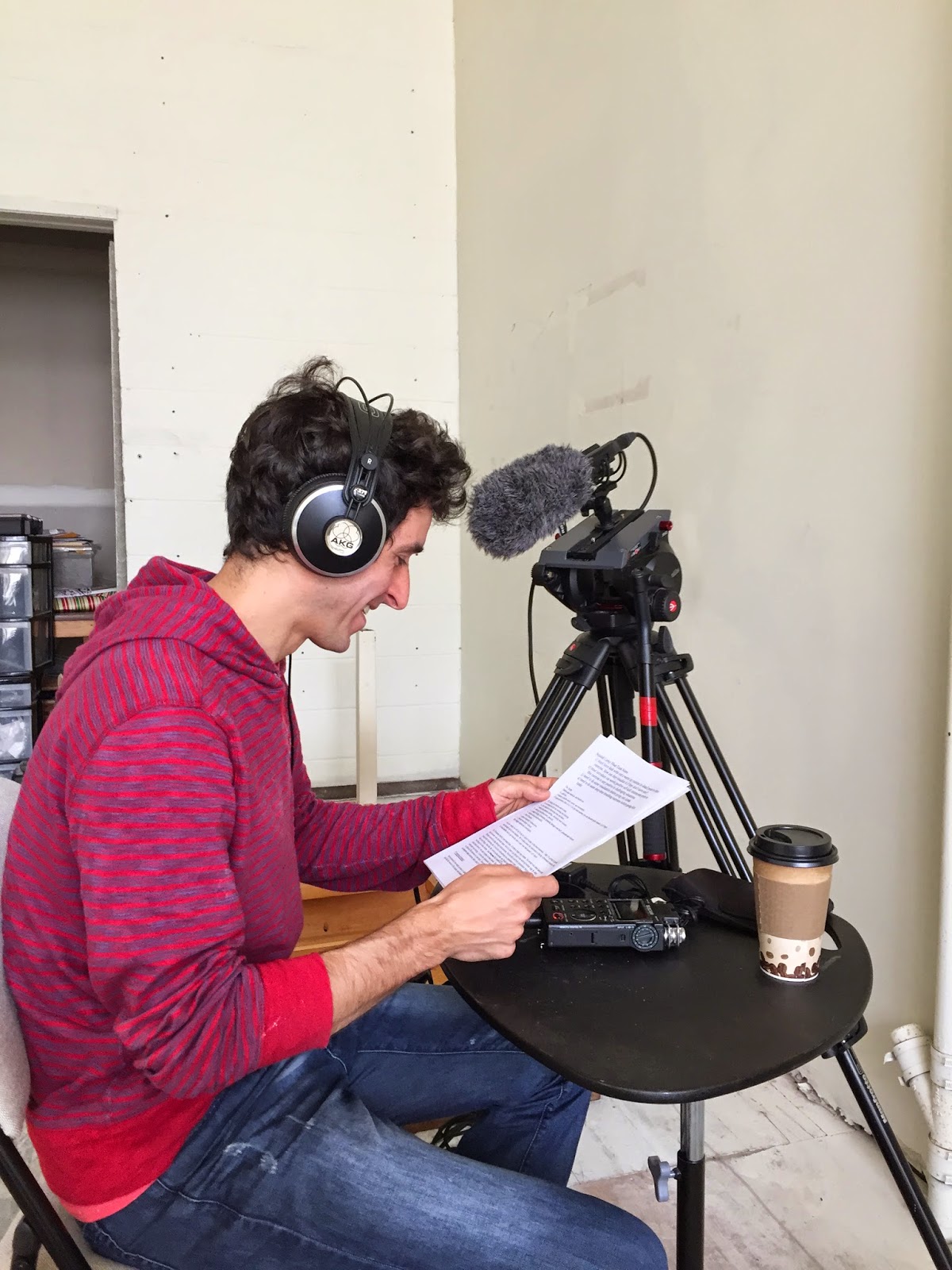
You can see from the image below that my friend who recorded the audio track and used to be in the video and editing business and produced a high quality recording. At the beginning of the track we went through some standard relaxation techniques to help the child get comfortable and focus on taking slow, deep breaths.


I wrote a 4 page script (below) that we recorded. In behind the recording my friend included some soft music and sounds (birds chirping) to make the track less startling after having a few pauses. The pauses in the recording were for the kids to finish off visualizing the completion of a situation we set up for them. We did the floats on Thursday of the camp. Up to this point in the week we talked about staying positive, refocusing, deep breathing and imagery so they were prepared for the floats.


The first thing I had the kids visualize was preparing for their match. I asked them what they were wearing, what song they were listening to and they asked that they complete their warm up routine in their mind. After a 5 minutes of silence where they envision their warm up routine they are now about to step on court. We guide them through the warm up and the first couple of points. We then ask them to complete the game, shot by shot, including their routine between rallies. This was their first situation. 

The 2nd challenging situation was they were up 10-5 and let the lead slide to 10 all. I ask them to imagine how they were feeling and how they would respond. How course nobody wants to be in this situation and let a big lead slip away. But it happens to everyone from time to time. So how you respond in these situations is what I wanted to find out. I asked the kids to visualize the completion of this game. 

The 3rd situation I had them down 7 love in a game and asked how they would feel. Would they start worrying about getting bagled or would they be able to stay calm, positive and visualize themselves responding positively. 

The final challenging situation was in the finals. They were up 2 games to love against a top ranked player and lost the next 2 games. It was then 9 all in the 5th. They get a questionable stroke decision awarded against them. How do they respond from this situation down match ball? 

The 1st situation I presented was a positive one and the other 3 were challenging situations. I thought about including more positive and winning situations. I think this could help confidence and may allow them to be more successful. But I think it's much easier to handle winning situations with a clear mind than it is a challenging one. We all look to make excuses when things don't go our way. But these excuses are simply psychological. If we dwell on them they will become factual, so I don't like hiding from them. Embrace these instances simply as challenges, and see if you can overcome them. When you can do this it is extremely satisfying. 

The entire script was about 50 minutes including the silent parts for visualizing their responses. The age range was from 12 - 17. In total 10 kids floated and 1 had floated previously. 1 of them got salt water in their eyes and said he spent most of his time showering. The good thing about having them in their own rooms, was that if 1 of the kids didn't have the concentration to spend an hour trying imagery they wouldn't ruin it for the rest of the group. This is likely why the remainder of the kids said they enjoyed it and would like to do it again. The Floathouse had the audio on file for the kids to use if the want to try it again. I can also send them the audio track directly so they can listen to it on the plane or anytime they wish leading up to nationals. For many of the kids it was their first experience with imagery and a float tank. 

This was an interesting experience for me and one that I feel has great potential for all athletes. Like any skill we need to practice imagery to improve. When we combine it with a relaxing experience such as a float we also allow our bodies to recover from our hard physical training. Many of us train our bodies and neglect our mind. But if you want to be a champion, it's the mind that will set you apart. 

Hope you enjoyed today's post. Happy Easter to those celebrating. I have plenty of other posts I want to get into. I bought a receiver and earpieces from China. I used them during the camp and can talk directly to my athlete while they are playing. They are very cool. I will cover this topic in a post soon; less than a month from now I promise :) 

Tuesday, December 9, 2014

Meditation For Health, Happiness and Your Squash Game

Today I'm going to talk about meditation. Meditation is and includes relaxation and breathing exercises. I'm certainly no expert in meditation, but I know full well the benefits they can have on your health and your squash game. I've read a number of Zen books and have a pretty thorough understanding of the concept of meditation. Taking some time for yourself can help clear the mind. When a professional athlete gets to the highest level the psychological skills to perform at their highest level every time they play is what makes them special. Having control of their concentration and a clear mind is a big part of this. The good news is that you don't need to be a professional athlete  or a monk to try and benefit from mediation.

From what I've read you don't even have to follow the guidelines in Zen books. In Zen you are supposed to sit a certain way with good posture. If this is what works for you then great. But I think you can take a mental time out in a variety of ways. I go for a weekly 90 minute float in a float tank. This is time away from your computer, your phone and work. It's a time to just sit. Sometimes I am able to simply count my breathing and quiet my mind while other times my thoughts drift around. No matter what happens though I always get out and feel much more energized.

What you want to do during mediation is up to you. When you try not to think, you aren't really in a relaxed frame of mind. So personally I don't worry about this. If something enters your brain just let it go, but don't force it out. The idea is to be living in the present. That you are the centre of your universe. Your attention moves inward. Focusing on your breathing allows your attention to be in the now. After trying some mediation and floating I realize how frequently my thoughts drift to the future and the past. All we have is this present moment so this is where we should focus our attention and energy and to just live. This is the mindset we need to play our best squash. When I was younger I would spend most of my time and effort trying to achieve future goals. Little did I realize I was so focused on the future that I didn't always take care or enjoy of the present. Having gaols is great, but we shouldn't spend all of our time and effort living in the future.

So how exactly does mediation help your squash game? Well for starters, I read recently that their was a Harvard study that suggested that after 6 weeks of regular meditation the participants gray matter density in their brain increased. http://www.feelguide.com/2014/11/19/harvard-unveils-mri-study-proving-meditation-literally-rebuilds-the-brains-gray-matter-in-8-. The participants also said they felt less stressed after doing their meditation. So meditation is relaxing, but also improves our brain functioning. When I was young I had poor concentration. I think this is why I didn't enjoy reading and had trouble with imagery. So I feel that mediation can help your focus and concentration. As I've already said, mediation can allow you to enter into the now by focusing on your breathing. This can be extremely beneficial before and during a squash match. If you're nervous or feel some anxiety, doing some breathing exercises and meditation can calm you down and bring you back into the present. I've read Phil Jackson's book, Sacred Hoops. Phil said he had team mediation sessions when he coached the Lakers. Sometimes in the heat of battle being able to step back and take a breath can give you an edge. When we become too emotional we can use mediation and breathing to relax us, refocus and recenter.

I don't have all of the answers about mediation. But I have come across a website that is designed specifically to help people meditate. You can check it out here calm.com. It's an interesting concept. Is staring at a computer screen the best way to unwind? I'm not sure, but you can always close your eyes and listen to it. You can select how long of a timer you want to set, change the display and they have a person talking to help guide you through some relaxation. They also have an app for the iPhone and Android. You may find a simple app like this helps you relax and sleep better during tournaments.

I've found meditation and imagery to be one of the toughest areas to teach. Just like when I was a kid, many kids don't have the concentration and can't sit still or just don't appreciate this part of the game yet. It is something that I believe is important to introduce to kids that want to play competitively. Psychological skills and mediation goes much beyond squash. Like any skill you get better with practice. So stick with it and make it a part of your routine.

I know a lot of yoga classes have a breathing and mediation aspect to them. I really enjoy floating. Some people find running to be therapeutic. Run hard enough until your mind wants to stop and all the other mental noise is drowned out.

Do you have any experience with mediation? Have you ever read or heard of Zen Mind, Beginner's Mind? It's a good into book to Zen. It was written for western culture. Zen has been through fads on the North America's west coast. How about the book 'The Power Of Now' by Eckhart Tolle? If you're just getting into mediation or Zen I would recommend these two books.

 I find it fascinating and believe we would all be happier and healthier and of course play better squash if we made a little quiet time for ourselves once in a while. Maybe you're thinking, who has time to meditate every day? You likely do, but also it doesn't have to be something you do every day. If you end up feeling better because of it, it will be worth every minute of it and you won't want to go a day without it. It can reduce your stress, improve your brain functioning, help you control your emotions, improve your concentration and can benefit your squash game. If you don't already meditate, I hope I'v'e convinced you to give it a try.

Monday, December 1, 2014

Staying Positive After Errors

Today I'm going to back up what I discussed yesterday. My last post was about believing in yourself. I had a section in this post about how this is even more important for an attacking player as this style of squash is prone to having a few more unforced errors to go along with it. I notice that unless people have to play an attacking style of squash, for example if they are unfit, injured or elderly, most people don't. This has a lot to do with how we respond and interpret to risky or low percentage shots and unforced errors; we're just limiting ourselves because of a few short term blunders. Today I'm going to discuss how to stay positive and what I think after I make a mistake. Regardless if you are an attacking player or not being able to stay confident after making a mistake is an important trait for playing consistent squash.

At most levels of squash whoever hits less mistakes generally wins. But at least for me this isn't an enjoyable way to play squash. I know I always praise Ramy, but this is what makes hims so special. Not only does Ramy attack better than those that can't or don't want to run, but he has proven that you can play this style successfully at the highest level. For Ramy or anyone else that wants to play a successful attacking brand of squash they need to know how to quickly forget mistakes, accept them, stay positive, keep firing and stay confident. Ramy would't have become who he is today if he got cautious and defensive after making a couple of mistakes.

I enjoy playing an attacking style of squash and came up with my own system for responding to my mistakes. This is how it goes. If I hit a forced error I say or think 'good shot.' Sometimes there is nothing you can do about it. This doesn't bother me at all. Sometimes I know my shot previously had to be better, that's all. It gets trickier when you hit an unforced error. When I do I think, 'was this the right shot?' If my answer is 'yes,' I tell myself good. I may reinforce how I constructed the rally correctly, to stay attacking, aggressive and to keep going for it. Basically I can let this type of unforced error slide and I am able to stay positive when I make this type of mistake. This reminds me of a baseball scenario. When a fielder makes an error on a play, some don't want the ball hit to them again. But the good ones do, they have confidence that they can make that same play next time. They stay positive, shrug off the mistake and believe they can do it next time. This is the same when I miss a shot that was on.

If I hit an unforced error and I forced it a little and it wasn't on, this is when the learning takes place. Any attacking player has a fine line between attacking too much and being a tad reluctant. There are so many shots played within a rally, game and match that we are bound to make a few poor decisions. When I force the ball a bit and make an unforced error I'm not too hard on myself, because to become a top good attacking player you have to err on the side of being a little too aggressive versus being a little too passive. At least this is my perspective. I've played in matches where I made a few errors and stopped going short. Then I get away from the style I enjoy playing and over the long term would be more successful. So even though I force a shot and make a mistake, I'll just tell myself it wasn't on and I'll ideally this means I won't try that same shot again. Of course when someone hits a very risky shot but it works out for them, they should count their blessings and be thankful that they got away with it.

I've found that reflecting on my errors in a systematic formation helps me refocus faster. As I began doing this more frequently I would be able to shrug off an error almost instantly and stay confident and positive. I've also found that this helps me focus on the process as opposed to the outcome. I'm trying to play the way I want to play. I won't sacrifice this at possibly the expense of losing a rally, game or match. I didn't always think this way though. I wish I had as I think this is a great method for continually improving your tactics and your shot selection. If you do this you will find there are less times where you show indecision and frustration after making an error. Learn from it, stay positive and move on.

This philosophy sounds simple and easy, but at times it can be quite challenging. We all have a day where we are not quite squaring up the ball or make a few poor decisions in a row or hit a couple of bad unforced errors one after another. This is when it is a true test of your confidence. Normally this is a lack of confidence but it also happens randomly simply because of chance and statistics. If you realize it's a lack of focus you need to have a good between rally routine to get you regrouped. It's like hitting a reset button. What has happened in the past doesn't matter. Move on and start from right now. If you want to become more consistent learn how to refocus. Everyone loses their focus from time to time, but experienced players will catch this and will be able to get their mind back on track quicker than most amateurs.

So how does this approach apply to you if you're not an attacking player. The main thing is to just make good decisions. If you make a mistake but it was the right decisions, don't get upset about it. Everyone misses shots. Getting angry about it only makes it worse and can negatively impact the next time you're in a similar position. This is when you get indecision, some funky swings and some tightly held grips. You have to committed and confident before you play a short ball. When we concentrate on such short term products and let them bother us, such as a 1 or 2 tins we are limiting our potential to grow.

Also worthy to note here is your margin for error on your attacking shots above the tin. Some people give so much margin and don't technically make any unforced errors, but if you leave a lollipop at the front for your opponent you are asking for trouble. Though my coaching courses I was always told that drop shots are 'pressure shots' not 'winners.' Sometimes a pressure shot may result in a winner, but the main goal is to work your opponent, get your drop tight and maybe you can force a stroke a a loose crosscourt and cut it off. But when I watch Ramy play I see that he tries to hit winners. He has a small margin of error but is always very close to his target. He has such good touch and feel that his racquet is an extension of his arm. If your technique is good and your timing is spot on you can have a smaller margin. If you're a mid amateur player and your technically not very strong on your drop shot you will probably avoid it or play them with a large margin for error. If you're making to many unforced errors is your margin too small for your ability and the pressure you're under? This is an important point when interpreting your unforced errors. If you make 3+ unforced errors per game on the same shot it needs some extra practice.

How do you play the big points in a match? Do you play more defensive? Stay aggressive? Do you simply give more margin of error when you go short? Most people play a bit more conservative which is fine. I like to continue playing my game. Again though, this is where you may need to do a nerve check. If you can stay relaxed in this moment you'll be fine. If you're in the zone just keep doing what you're doing. But if you are a bit nervous and you can feel some tension in your body, namely your arm, you should probably be more cautious. This is why it was awesome to see Ramy in extra points in the 5th game of the World Championships. Ramy was down a match point and hit some amazing shots. You could tell he was still relaxed somehow. He was able to stay positive and not think what most of us would be, 'I can't believe I just blew 5 match balls and now I may lose this.' And then when Ramy got another chance to close it out he hit a great backhand volley drop that was too good for Shorbagy. Being so relaxed on the biggest stage in a pressure situation was cool to watch. Ramy showed us once again (through vicarious learning) that staying calm, relaxed, aggressive and focused during the biggest points on the biggest stage is possible.

For Ramy to play best he needs to keep his mind out of the way. We all play better when we play instinctively. When we are playing our best it is our mind that is at peace; when this is happening we are in what has been phrased the zone. When an athlete is in the zone time appears to slow down. We see the squash ball earlier, it looks bigger and we make good decisions and consistently square up the ball. Why can't we always play in this mental zone? We can't force our mind into this state and often it is our overthinking and judgement that gets in the way. We all judge and are very critical about our performance as we're playing. We also think too often about what has just happened and what may next. Shut up brain! This is destructive to your next point and will not allow you to be in the optimal mindset for playing your best squash, in the present and in the zone.

As I mentioned above, I thought it was amazing that Ramy could stay in the zone in such a pressure situation. How can he play like he doesn't know what's at stake if he clips the tin one more time? If he started thinking about this it would show on his body language. It rarely happens to Ramy though. I do think he looked a little shaky out of the gate though. At the start of the match is one area where I think it's important to settle your nerves before you start firing it in short. Ramy is notorious for being a slow starter. Even if we're focused at the start of our match, we can't be in the zone until we begin playing. If you're mind is wandering about and you feel some tension in your body you should flush this out of your system first.

This is why a prematch and between point routine is so effective at getting our mind into a consistent state to perform at our best. Take a deep breath between points and try and slow things down. I find most people rush when they are nervous or edgy. If you can try and slow things down and keep it simple at the start of the match you can slowly find your range and eventually your attacking shots. As I've heard before, the most important drop you play is the first one. Hit a poor one and you start thinking about it and doubting yourself; hit a good one and you fuel your confidence.

There is less margin for error attacking short and if you haven't found your range at the start of the match you are at risk of handing your opponent some free points. Even worse is that you allow them to relax and settle down while your anxiety increases with your poor start. As I discussed above, the same thing goes for playing the big points. If you feel a little uneasy play more conservative. So yes, this is how I would coach Ramy to improve his first game performances. But he is human after all! I would also advise him to do some imagery before his matches to try and get him not just focused but as close to being in his zone as possible from the first point of the match.

How do you react to your mistakes? How long does it take you to forget and move on after making an unforced error? What if you hit 2 or 3 in a row? Remember that squash is a game. Squash has a major psychological component to it. Is how you're handling errors helping or hindering your performance? Improve this area of your game and focus on the process and you'll make better decisions and play more consistent squash.