Sunday, April 5, 2015

Float Tank Squash Visualization

It's hard to believe it's been over a month since my last post. I have been quite busy preparing for and then running 2 weeks of spring break junior camps. Canadian Junior Nationals are in a week and a half and some of the kids in the camps were preparing for this event. The first camp I ran was for intermediate competitive juniors and was only half days. The 2nd week was full days and for advanced competitive juniors. In the advanced camp this year I decided to include something a little different.

My friend opened the Victoria Float House (www.floathousevictoria.com) almost 1 year ago and is also a good squash player. He grew up playing competitively and understands the importance of the mental game in squash. I feel it can be challenging working with a group of kids and implementing imagery into practice, so for the camp I decided to book each kid a float and recorded an audio track to guide them through some challenging situations that may occur at Nationals.

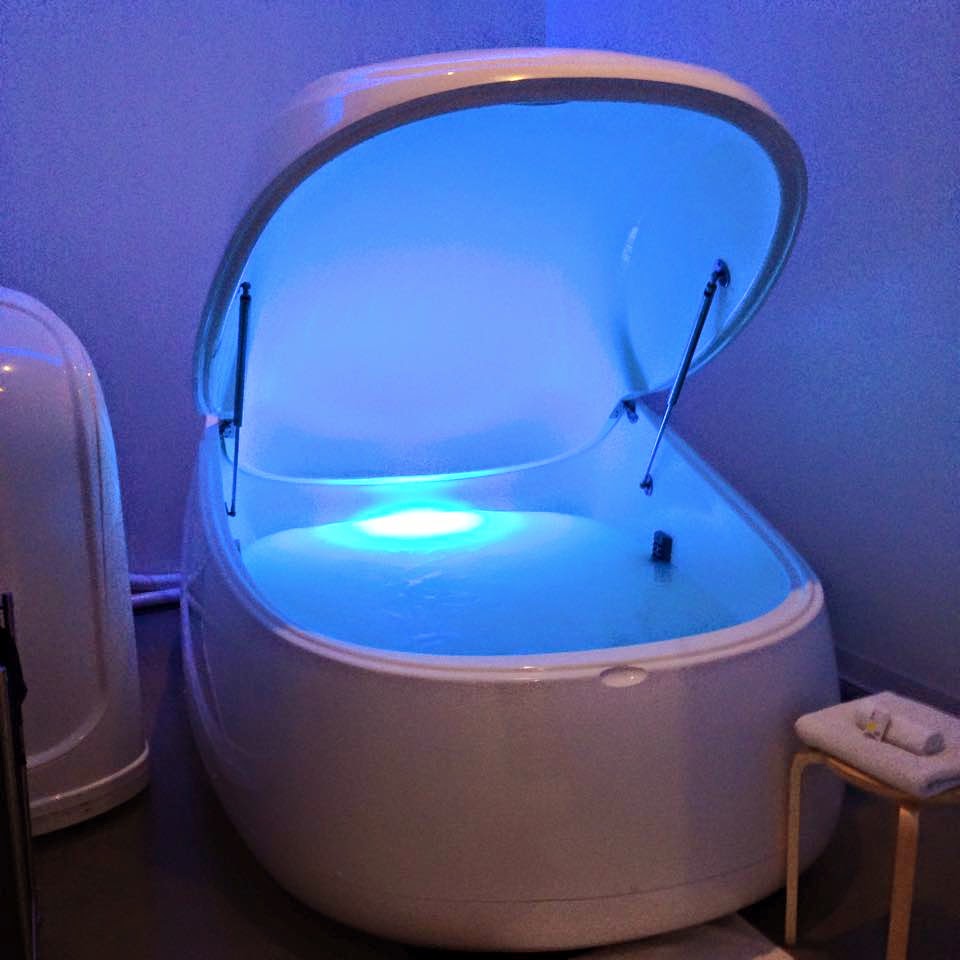
Here is a picture of one of the float tanks. You can turn the light off when you get in the tank. But only a few kids said they turned the lights off.

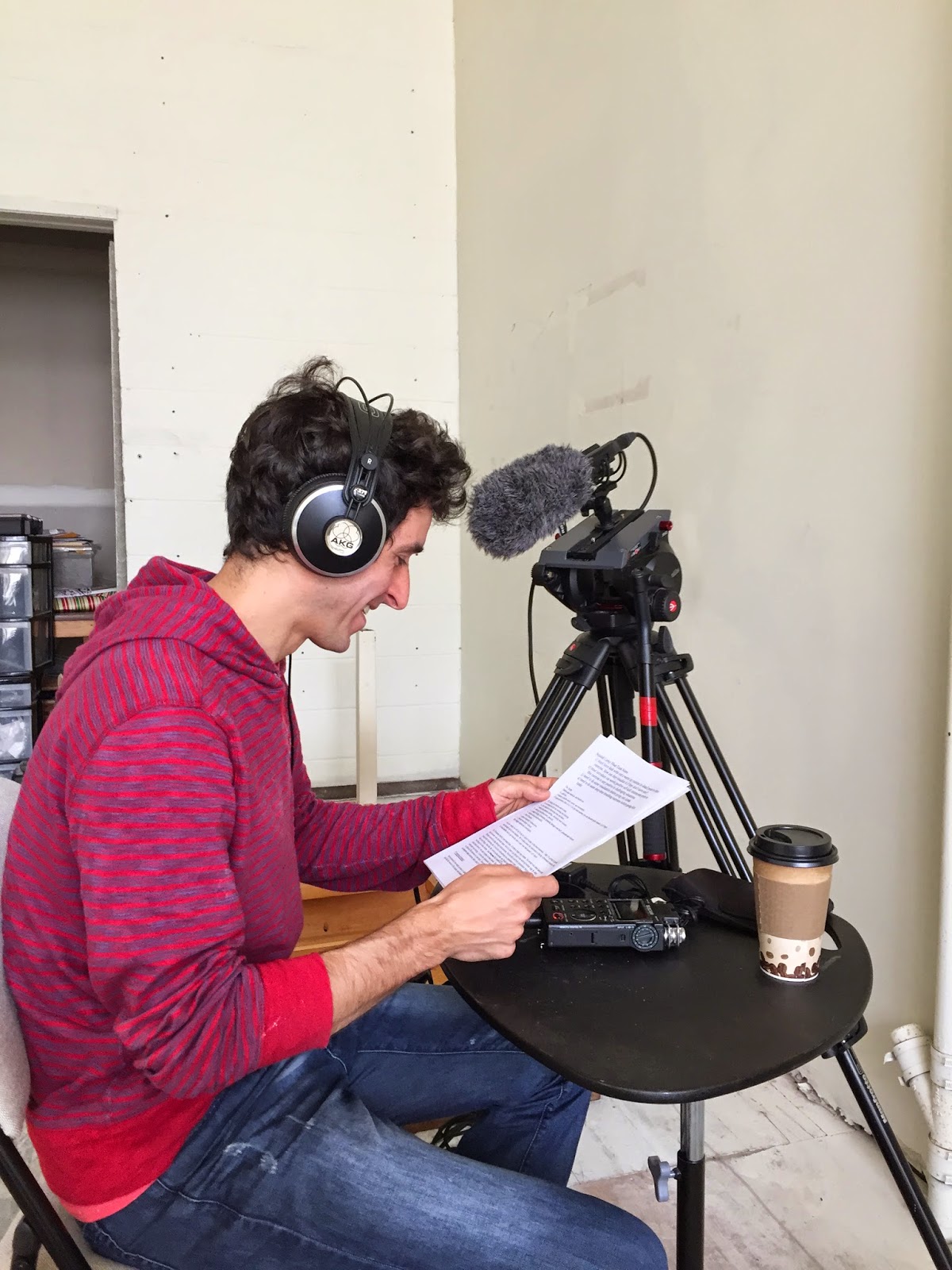
You can see from the image below that my friend who recorded the audio track and used to be in the video and editing business and produced a high quality recording. At the beginning of the track we went through some standard relaxation techniques to help the child get comfortable and focus on taking slow, deep breaths.

I wrote a 4 page script (below) that we recorded. In behind the recording my friend included some soft music and sounds (birds chirping) to make the track less startling after having a few pauses. The pauses in the recording were for the kids to finish off visualizing the completion of a situation we set up for them. We did the floats on Thursday of the camp. Up to this point in the week we talked about staying positive, refocusing, deep breathing and imagery so they were prepared for the floats.


The first thing I had the kids visualize was preparing for their match. I asked them what they were wearing, what song they were listening to and they asked that they complete their warm up routine in their mind. After a 5 minutes of silence where they envision their warm up routine they are now about to step on court. We guide them through the warm up and the first couple of points. We then ask them to complete the game, shot by shot, including their routine between rallies. This was their first situation. 

The 2nd challenging situation was they were up 10-5 and let the lead slide to 10 all. I ask them to imagine how they were feeling and how they would respond. How course nobody wants to be in this situation and let a big lead slip away. But it happens to everyone from time to time. So how you respond in these situations is what I wanted to find out. I asked the kids to visualize the completion of this game. 

The 3rd situation I had them down 7 love in a game and asked how they would feel. Would they start worrying about getting bagled or would they be able to stay calm, positive and visualize themselves responding positively. 

The final challenging situation was in the finals. They were up 2 games to love against a top ranked player and lost the next 2 games. It was then 9 all in the 5th. They get a questionable stroke decision awarded against them. How do they respond from this situation down match ball? 

The 1st situation I presented was a positive one and the other 3 were challenging situations. I thought about including more positive and winning situations. I think this could help confidence and may allow them to be more successful. But I think it's much easier to handle winning situations with a clear mind than it is a challenging one. We all look to make excuses when things don't go our way. But these excuses are simply psychological. If we dwell on them they will become factual, so I don't like hiding from them. Embrace these instances simply as challenges, and see if you can overcome them. When you can do this it is extremely satisfying. 

The entire script was about 50 minutes including the silent parts for visualizing their responses. The age range was from 12 - 17. In total 10 kids floated and 1 had floated previously. 1 of them got salt water in their eyes and said he spent most of his time showering. The good thing about having them in their own rooms, was that if 1 of the kids didn't have the concentration to spend an hour trying imagery they wouldn't ruin it for the rest of the group. This is likely why the remainder of the kids said they enjoyed it and would like to do it again. The Floathouse had the audio on file for the kids to use if the want to try it again. I can also send them the audio track directly so they can listen to it on the plane or anytime they wish leading up to nationals. For many of the kids it was their first experience with imagery and a float tank. 

This was an interesting experience for me and one that I feel has great potential for all athletes. Like any skill we need to practice imagery to improve. When we combine it with a relaxing experience such as a float we also allow our bodies to recover from our hard physical training. Many of us train our bodies and neglect our mind. But if you want to be a champion, it's the mind that will set you apart. 

Hope you enjoyed today's post. Happy Easter to those celebrating. I have plenty of other posts I want to get into. I bought a receiver and earpieces from China. I used them during the camp and can talk directly to my athlete while they are playing. They are very cool. I will cover this topic in a post soon; less than a month from now I promise :) 

Tuesday, March 3, 2015

If You Could Only Do One Thing Really Well

Today I'm going to talk about what I think is the most important part of the game. If you could do one thing amazingly well, what would it be? What shot or quality would allow you to be the most successful and cause problems for your opponents? Of course this may change depending on who you're playing against.

We would all love to be stronger, faster, fitter or maybe more mentally tough and disciplined. Would any single one of those traits be enough to beat most players? Not without the racquet skill or proper shot selection. So let's move on.

You see some people that make very good decision, but can't quite execute the shot. Making good choices is a big part of the game, maybe the biggest. I'd rather someone make good choices with bad technique than poor choices with a perfectly grooved swing. I'd pick the thinker any day. But still, I don't think making good choices in itself is the single skill quality that would allow you to play the best.

Now it's time to move on to shots. I know most kids want to say nicks or drops. But we all know nobody wins just because they can hit nicks. Pretty tough to hit 33 of them in a match, especially if you can't hit the shots to set up the openings to go for them.

If we look to some of the basic shots I believe we will start to see what is really crucial in the game. The serve and return of serve are high on this list. A great serve in itself is not going to be enough to win beyond the novice level, but it was still give you some free points each game. If you can't return a good serve you can lose very quickly. But of course once you get the serve back this skill isn't going to assist you much. So although I believe the serve and return of serves to be critical skills, they are not enough on their own to be successful.

Of course I know what you're thinking, 'it must be length.' Don't get ahead of yourself yet. If you could only perfect one length shot which would be the most beneficial to your game? Would it be a forehand or backhand? Would it be a straight or crosscourt drive? I believe that the straight drive on the left hand wall is the most crucial shot in squash. This is where much of the game is played and most of the shots are hit into. If you are more accurate over here and can get good drives back as good drives, you will probably be very successful. I consider a good drive on the left wall to not come off the back wall much (or any depending on your positioning and your opponents). We all know tighter is better, but the depth is equally or even more essential at a high level.

If you get the depth right on a straight drive on the left wall your opponent shouldn't be able to crosscourt drive or attack short well. There is very low risk hitting a backhand drive if you know you can hit it tight and apply pressure with it. Even though there is a lot more to the game than this I feel that if you have fantastic control and consistency on this shot you can win point after point over there. You can set up easy shots to attack of just keep someone pinned in the back level corner. This is likely my best shot (probably because I've hit it so much), and is the shot I feel most comfortable with. If I'm playing a big point I know I can keep it on this wall and I have an excellent chance of winning the point. And that's what squash is, giving yourself the best odds to win each rally.

You might have noticed that I kept mentioning the left side wall as opposed to backhand side. I think that this is also the same for lefties. Most lefties have much stronger forehands than backhands. I don't think I've ever met a lefty that was better on their backhand. Most righties aren't comfortable playing on the right side of the court so they tend to play lefties similar to other right handed opponents. For this reason I think that it is more important that left handed players have a better forehand straight drive than backhand. This of course in itself isn't enough to be successful though. If you can't hit a good straight drive on the right side of the court your opponent will just wait for you to boast or crosscourt to your strong side.

I remember Roger Federer once saying that he didn't spend much time focusing on his backhand (which was his weaker side) because he got so much repetition on it in matches. His opponents would always pick on it, so he decided to kept working on his strengths (his forehead). Was this right or wrong? Who knows. Clearly he's had an unbelievable career. But if we spend most of our practice time on one side than the other we will normally get stronger and tighter on that one side. This is why I find most people need to spend time working n the right wall; even though this isn't the shot that I deem to be most crucial to success. This is because more right handed players don't need much space to get the ball back over to the left side of the court.  On our forehand we are also stronger when the ball is slightly behind us as well.

Do you agree? Disagree? What single skill would allow you to have the most success? If it's your drive on the left side of the court do you spend your time working on it over and over? Or do you think like Federer and practice the other side which doesn't get as much practice time? If you do focus on the left wall remember there is a lot more than just constantly hitting the ball tight? Set up targets to keep your focus and concentrate on the depth. Footwork and racquet preparation is also extremely important into this corner. Do you lift the ball under pressure? Do you hit it flatter when you have some time and a bit of an opening? There are lots of subtle ways to put the ball into the same area of the court. This is what separates the elite players from the really good ones.